How Transportation, Sport and Pop Music Turned New Jersey Into a Shared Stage
Confessions on a World Cup Dance Floor
“We’re gonna have a celebration, all across the world.”
— Madonna, “Holiday” 🎉
Today, our muse and Lucky Star, Madonna, ⭐ will be at the center of the world’s biggest Holiday.
For one day, the world will come together around a field, stage and shared celebration.
Prompted by the shuttering of MTV’s international music channels in December, I wrote an essay, “The Day the Music Channel Died” about the loss of our shared cultural places.
MTV gave millions of people somewhere to gather. We watched the same videos, heard the same songs and sang them as part of a cultural conversation.
I ended the essay with Madonna because she embodied and elevated MTV’s belief that music could be visual, theatrical, restless and communal.
Beneath the nostalgia was a more personal question:
Where do we gather now?
I didn’t expect the answer to arrive through my transportation reports.
And I really didn’t expect it to arrive in my home state of New Jersey.
New Jersey has been the butt of jokes for centuries. The tradition started in colonial times apparently survives into the 24th century. In the Star Trek: The Next Generation episode “A Matter of Time,” the Enterprise crew discovers that a supposed historian from the future is actually an unsuccessful inventor and thief from 22nd-century New Jersey.
The galaxy may still be making New Jersey jokes a thousand years from now.
This week Jimmy Fallon quipped
“This weekend is the World Cup final in New Jersey. Yes, the final is in New Jersey. It’ll be a nice change to see guys in track suits who are actually playing a sport.” — JIMMY FALLON
But today, on one humid summer day in 2026, the punchline has become the center of the world.
Looking for an Escape
My May BOMA Transportation Report was supposed to be a lighter travel issue after a short escape to Miami.
Then the World Cup kept appearing.
What began as brackets and spectacle became a transportation story. What would our roads, transit networks, airports, office buildings, public spaces and communities experience when the world’s largest sporting event arrived in our backyard?
My June report was built around the need for a summer escape. I gave it an ’80s soundtrack because the right music can change a car ride.
Sometimes it changes the entire summer.
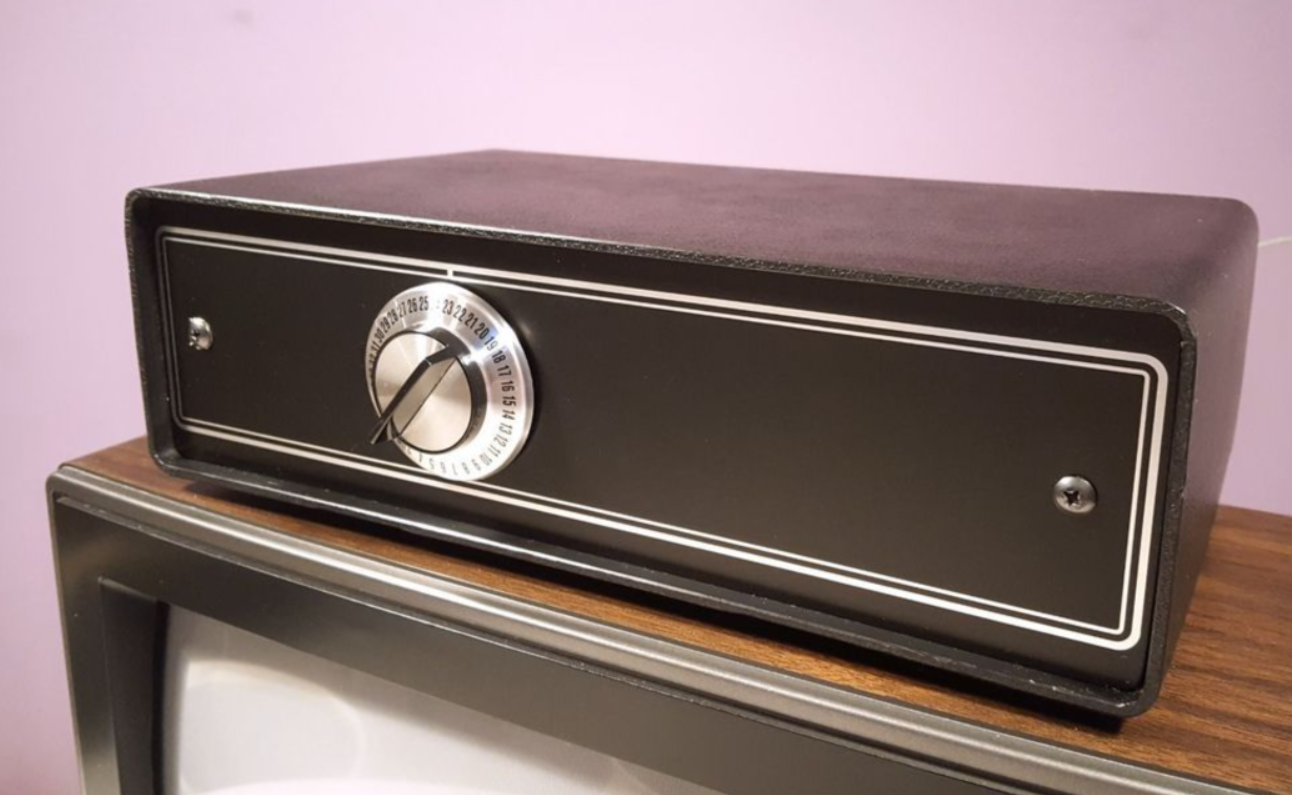
MTV once understood that. On my television, Channel 23 didn’t remove the pressures of daily life. It wired my cathode-ray tube to relieve them.
Transportation is supposed to carry us toward happier places, but this year transit complications and Amtrak’s woes have slowed us down and added expense to our trips.
Since the tournament began on June 11, the World Cup has supplied an unexpected kind of escape.
It was close enough to touch, emotionally transporting and accessible through broadcast, cable and streaming without the need to pay egregious ticket prices.
For more than a month, the tournament has given us something increasingly difficult to find: a reason to stop looking at our email and social media feeds and look in the same direction.
The tournament has been a welcome release.
More important, the matches have given us reasons to gather.
We Needed This
2026 has been a dour year.
Winter storms paralyzed travel across the Northeast. March brought long TSA lines at New York airports. Summer arrived with heat, humidity and powerful thunderstorms that disrupted roads, rail service and Fourth of July plans, followed by Canadian wildfire smoke that clouded our skies.
Transportation faced challenges beyond the weather.
The war with Iran added pressure to energy supplies and the global economy. Higher fuel costs didn’t stop at the gas pump. They flowed into jet fuel, airline operations and routing, ticket prices, shipping and the broader cost of travel. The International Air Transport Association said Middle East disruptions and high fuel prices sharply reduced airline profitability.
Every trip seemed to require more money, more planning and more tolerance for disruption.
This year has given us plenty of reasons to retreat into separate corners.
The World Cup didn’t solve those problems. For a while, it gave us something else to think about and a common conversation.
More Than Moving Crowds
The World Cup created shared transportation moments of its own.
It even marked a rare goooooal for New York-area transit.
Norway’s supporters turned their “Viking Row” into one of the tournament’s defining rituals. Hundreds of fans sat together and pulled imaginary oars in rhythm, transforming stadium sections, streets and Times Square into one enormous boat.
Nobody was actually going anywhere.
Yet for a few minutes, everyone was moving together.
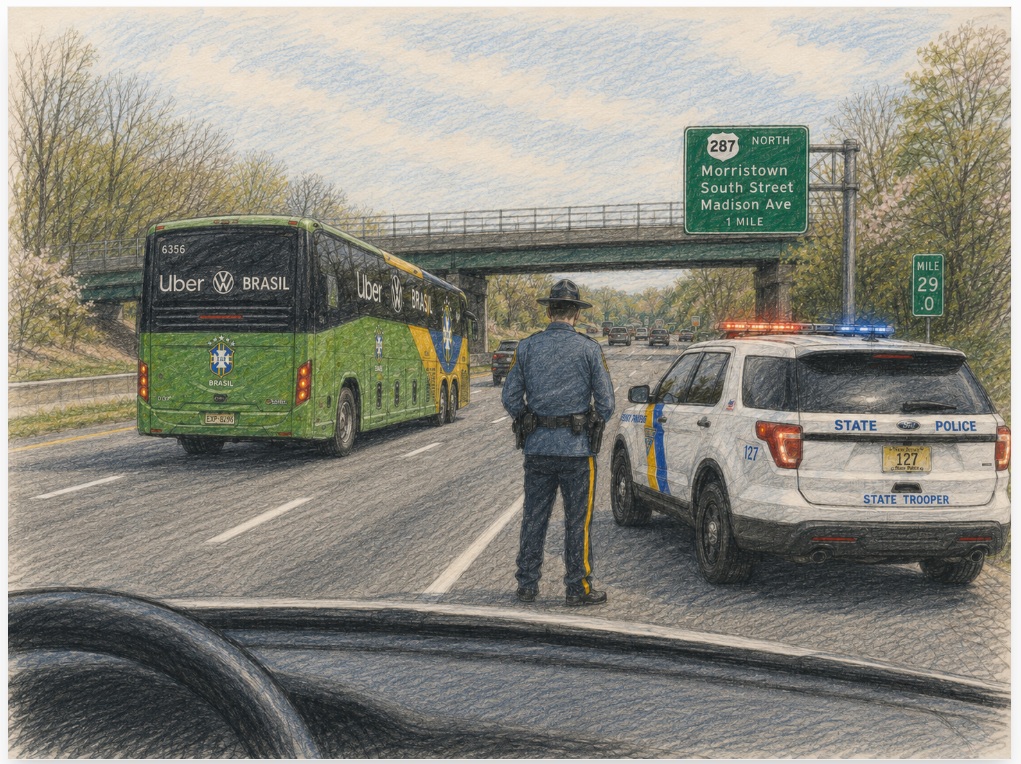 Earlier this month, I experienced a less choreographed version from behind the wheel in New Jersey.
State Police stopped traffic and cleared Route 287 so Brazil’s team buses could pass.
Under normal circumstances, being held on a New Jersey highway on the way to work would be another aggravation in a state with no shortage of them.
This time, it felt different.
The police escort went by.
The green Brazilian bus sped past.
For a few seconds, the World Cup was not just on television or behind the security perimeter at MetLife Stadium.
It was right there on the highway.
The world had arrived in our backyard.
A few days later, I saw another World Cup bus, this one parked at my neighborhood Wawa.
This one was bright yellow, wrapped for Lay’s and labeled BANDWAGON in letters impossible to miss.
Lionel Messi‘s hand was reaching for the bag of chips.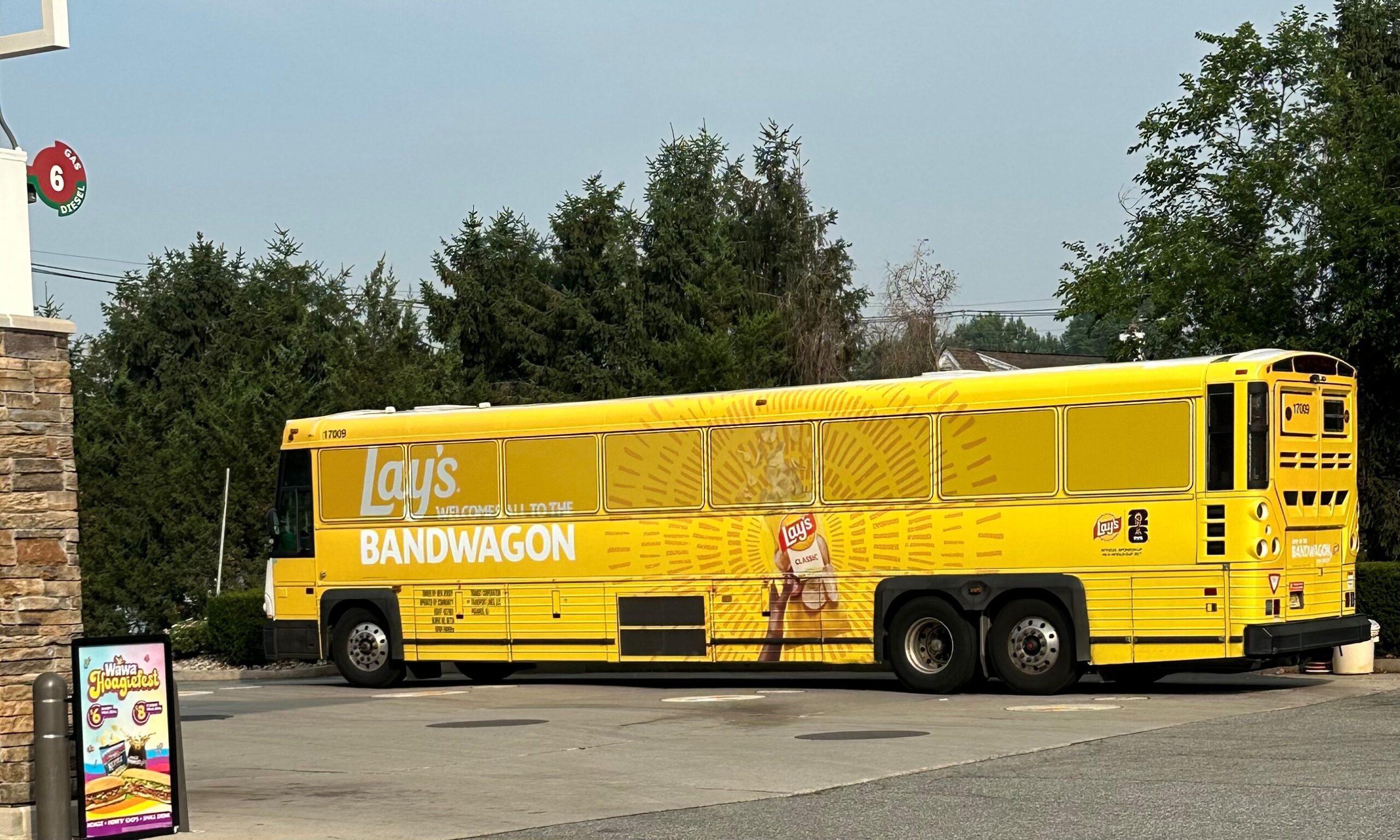
Messi has been more than Argentina’s age-defying captain. He’s the tournament’s universal pitchman, selling cleats, beer, snacks and home improvement without needing much explanation.
In other words, he’s all that and a bag of chips.
At a Wawa in New Jersey, the global spectacle had become part of the local scenery.
That’s what major events do when they take hold. They escape the stadium and alter roads, restaurants and routines.
Transportation becomes part of the memory of the event.
My May report and June follow-up questioned whether the region could move the crowds.
Now with the tournament on its final day, I’m more interested in how the crowds have moved us.
They filled trains with jerseys and songs. They turned bars, parks, office buildings and living rooms into watch parties. They brought traditions from other countries onto our sidewalks and invited everyone nearby to join.
At their best, buildings are gathering places.
A property manager can become the mayor of a small city, turning an address into a destination where tenants, coworkers and strangers can experience something together.
For a few weeks, the World Cup has given our buildings a town square.
A Giant Event at the Meadowlands
Today’s final features Spain and Argentina, two Spanish-speaking nations competing in New Jersey for a global trophy.
Officially, they are playing at “New York-New Jersey Stadium.”
Only FIFA calls it that.
It’s still MetLife. The Meadowlands. Bruce Springsteen’s backyard. For some of us, it is still where Giants Stadium used to be.
FIFA placed both states in the name, but New Jersey knows where the building is.
And on this occasion, “giant” is exactly the right word.
Nearly fifty years ago, the original Giants Stadium became one of American soccer’s first great stages when the New York Cosmos and Pelé transformed the Meadowlands into an international spectacle.
On October 1, 1977, 75,646 people filled Giants Stadium for Pelé’s farewell match between the Cosmos and Santos. He played one half for each team before a global television audience.
The event proved that an international superstar and an international sport could fill a New Jersey stadium and command the world’s attention.
Now the World Cup is concluding at the same Meadowlands complex.
The match is a Spanish-speaking final hosted in New Jersey, inside a stadium temporarily carrying New York’s name.
That one sentence contains much of the story of this region.
The World Cup celebrates the fact that we already are international.
Pelé and the Cosmos turned New Jersey into a global gathering place. Today’s World Cup Final completes the circle on a scale they could only have imagined.
The Celebration That Wasn’t
This summer, America’s 250th birthday should have produced a national celebration equal to the milestone.
Instead, the administration increasingly recast a national anniversary as a presidential showcase. The Great American State Fair struggled to find an audience, while several announced performers withdrew after saying they had been assured the event would be nonpartisan, only to learn of its political ties after their names were made public.
Thunderstorms and extreme heat disrupted Washington’s Fourth of July events. Evacuations and a late speech pushed the 40-minute fireworks display to just before midnight.
What should have felt expansive, joyful and communal became smaller, slower and more political than the occasion deserved.
The Celebration We Found
The World Cup has filled the gap left by a summer celebration that never quite came together.
The tournament had its share of controversy, from questionable refereeing, red cards and suspensions to the bizarre debate over whether a ball had struck an overhead camera cable. That’s familiar territory in modern sports, especially with an organization as distrusted as FIFA.
But the disputes remained part of the tournament. They never became larger than the event.
Fans brought their own countries, histories, languages, jerseys and loyalties into a common space.
The flags were different, but the experience was shared.
For one extraordinary month, stadiums, bars, parks, offices and living rooms have filled with people watching the same clock and feeling the same suspense.
Strangers became temporary neighbors.
Earlier this year, Bad Bunny’s predominantly Spanish-language Super Bowl halftime performance became an argument about identity, language, politics and who belonged at the center of America’s largest entertainment stage.
Many people experienced it as joyful and culturally meaningful. Others treated the language itself as a provocation.
The Super Bowl became an argument about culture.
The World Cup has become a celebration of it.
Spain and Argentina are playing in New Jersey. The halftime performers represent multiple generations, countries and continents.
Longtime football fans (soccer for U.S. readers) have argued that a Super Bowl-style halftime production doesn’t belong in the World Cup Final. They criticized the extended break and additional spectacle as another example of FIFA commercializing the game.
Yet the argument has not overshadowed today’s match.
Sport gives us the reason to gather.
Music gives the gathering a pulse.
The Music Found Another Stage
That brings me back to MTV. It did more than play music. It gave people something to experience at the same time.
For four minutes at a time, millions entered the same mesmerizing visual world, watched the same videos and carried the experience back into their separate lives.
The World Cup has recreated that feeling on a larger and more physical scale.
Across time zones, people waited for the next burst of brilliance from Haaland, Messi, Ronaldo or Mbappé, knowing it might become the moment everyone talked about the next morning.
The vehicle is different, but the need is familiar: not just to be entertained, but to experience the same thing at the same time.
I concluded my MTV essay with Madonna because no artist better represented the channel’s visual ambition, theatricality and belief that music could become a communal experience.
Her performances helped define and fuel MTV’s rise. At the inaugural Video Music Awards on September 14, 1984, she emerged from a giant wedding cake to perform “Like a Virgin.” After losing a shoe, she rolled across the stage in her wedding dress and turned an apparent mishap into one of MTV’s defining images.
Less than a year later, on July 13, 1985, Madonna performed at Live Aid in Philadelphia before a packed JFK Stadium and a worldwide television audience.
She showed that pop music did not need to imitate rock ’n’ roll royalty to command the same enormous stage. It could arrive with a microphone, a beat, movement and personality and still hold the world’s attention.
Live Aid gave a global television audience an indelible memory while raising more than $100 million for famine relief.
Forty-one years later, Madonna will arrive at another global gathering in the same region.
At halftime, she will join Canada’s Justin Bieber, Colombia’s Shakira, South Korea’s BTS and Nigeria’s Burna Boy, plus Staten Island’s PS22 Chorus and the New York Philharmonic conducted by Venezuela’s Gustavo Dudamel.
The lineup crosses generations, countries and musical traditions.
Madonna is the bridge from Live Aid and MTV to the World Cup stage.
Come Together
When I look back on my posts and reports this year, they share a common theme: a wish for greater community.
The MTV essay mourned the loss of a shared place.
The May transportation report asked how the world would reach our region.
The June report looked for a summer escape.
The World Cup answered all three.
For a month, people have looked up from their separate worries and watched together.
Shared attention has not disappeared. It has become rarer, and more cherished.
Transportation got us there.
Sport gave us something to share.
Pop music became the glue.
The World Cup concludes this afternoon.
Let’s give people reasons to come together tomorrow too.