At Bell Environmental, performance has always been built on substance
I recently borrowed Lady Gaga for an unusual lesson about transportation.
In “Transportation Has Entered Its Gaga Era”, I looked at something that has become increasingly noticeable after four years of writing the BOMA Transportation Report. Transportation agencies have discovered personality.
New Jersey’s clever highway signs were an early example. Today, agencies use humor, social media, videos and memorable campaigns to get people interested in subjects that once arrived primarily through press releases and service advisories.
That’s not a bad thing. Getting people’s attention matters.
But the point of the Gaga comparison wasn’t really the costumes.
It was what was underneath them.
Lady Gaga could attract attention with spectacle, but strip all of that away and she could sit at a piano and sing. The presentation worked because the substance was there.
The costume only works if you can sing.
After applying that standard to transportation agencies, it occurred to me that it’s a pretty good standard for Bell Environmental, too.
Because Bell has plenty of visibility.
We’ve served New York, New Jersey and the surrounding region for decades. We’re active in organizations like BOMA and the commercial real estate community. We advertise consistently. We’ve sponsored Jim Kerr’s “Strange News: Hard to Believe, But True” on Q104.3. Our trucks and technicians are familiar sights at properties throughout the region. And we have a canine detective, Roscoe, who may be better known than some of us.
We like having a personality. We’re proud that people recognize the Bell name.
But a bigger stage creates a bigger obligation to perform.
Branding can get somebody’s attention. Reputation can help get you through the door.
Once you’re inside, you still have to know what you’re doing.
More Than 50 Years in the Classroom
Recently, members of the Bell team spent most of a Saturday at our Parsippany office in pesticide recertification training.
The subjects weren’t glamorous: pesticide labels, PPE, toxicity, environmental concerns, spills, sensitive areas, vehicle requirements and inspections, application techniques and the responsibilities that come with using professional pest-management products.
Nobody was going to confuse it with the Mayhem Ball.
But this is what the singing looks like.
And it isn’t something Bell recently discovered.
Our commitment to technical education goes back to the early 1970s, when Bell brought Ph.D. professors and scientists into the company to train our technicians.
More than five decades later, the details have changed, but the principle hasn’t.
Professional pest management requires professional knowledge.
A technician has to identify the pest and understand its biology and behavior. Why is it there? How did it get inside? What is allowing it to survive? What control methods are appropriate? What does the product label permit? What conditions exist around employees, customers, food, sensitive materials or other parts of the environment?
And sometimes the most professional decision is knowing not to make a pesticide application at all.
Integrated Pest Management: Before IPM Was Fashionable
That philosophy also helped make Bell an early practitioner of Integrated Pest Management, or IPM.
The basic idea is straightforward: effective pest management shouldn’t begin and end with chemicals.
If pests have food, remove the food source.
If they have water, find the source of moisture.
If they’re getting through a hole, seal the opening.
If sanitation, storage, landscaping or building conditions are helping them survive, change those conditions.
Inspect. Monitor. Identify. Exclude. Modify the environment. Then use targeted treatments when they are appropriate while minimizing unnecessary pesticide usage.
The objective is not simply to kill the pest you can see. It is to make the environment less hospitable to the pest in the first place.
That can provide better long-term pest management while also protecting people, products and the environment from unnecessary exposure to chemical pesticides.
Today, sustainability, reduced chemical usage and environmental responsibility are important priorities throughout commercial real estate.
For Bell, those aren’t ideas we recently adopted because they sound good in a brochure.
We’ve been living them for decades.
Why Pest Prevention Often Means Nothing Happens
There is a reason all of this matters so much in our particular business.
Pest control isn’t glamorous.
Most customers aren’t excited to need us. They are, however, very glad to have the protection we provide.
When a pest-management program is working well, most people inside a building may never think about it.
Nobody walks into an office lobby and compliments the absence of mice.
A hotel guest doesn’t leave a five-star review because there weren’t bed bugs.
A restaurant customer doesn’t congratulate management because no cockroach appeared during dinner.
Often, the best evidence of successful pest management is remarkably simple:
Nothing happened.
But the other side of that equation is very different.
The downside risk of a pest problem can be enormous.
A mouse running across a public lobby, a cockroach appearing in an office or restaurant, a bed bug in a hotel room or a bird in the wrong place can cause distress far beyond the physical presence of one pest.
Employees notice. Tenants notice. Customers and visitors notice.
Pests can threaten products and materials. They can disrupt operations. They can create health and sanitation concerns. And they can damage confidence in the organization responsible for the environment.
Today there is another factor. Nearly everybody who encounters the problem has a camera and access to social media in their pocket.
A small pest issue can become a very public reputational issue remarkably quickly.
That’s the unusual bargain at the heart of professional pest management:
Success is mostly invisible. Failure can be spectacularly visible.
An Open Door Can Change Everything
Even a successful pest-management program doesn’t get to declare permanent victory.
Buildings aren’t static environments.
Weather changes. Temperatures rise and fall. Construction begins next door. Deliveries arrive. Food and waste move through properties. Landscaping changes. A pipe leaks. A tenant changes operations. Activity in a neighboring property sends pests looking for somewhere else to go.
Sometimes somebody simply leaves a door open.
An environment that presented one set of pest pressures yesterday can present another tomorrow.
That’s why professional pest management is an ongoing process, not a product that gets purchased once.
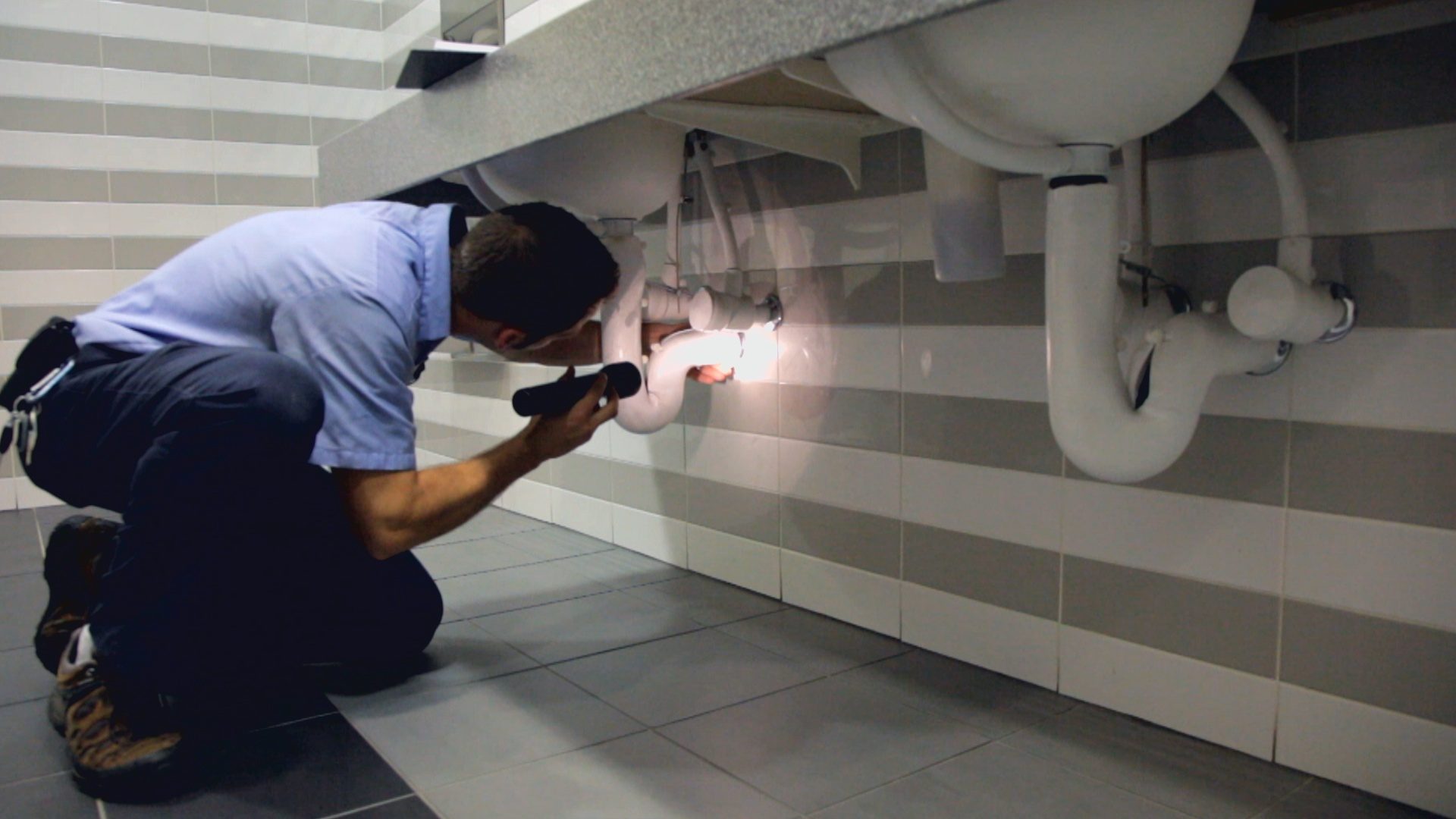
We inspect. We monitor. We look for vulnerabilities. We communicate with customers about conditions we’re seeing. We try to understand what changed before a small change becomes a large problem.
And because the environment keeps changing, our knowledge has to keep changing with it.
Products change. Regulations change. Technology changes. Building practices change. Pest pressures change.
Experienced technicians need to refresh what they know. Newer technicians need to learn from people who have spent years encountering situations that don’t fit neatly into a textbook. Employees need to earn and maintain licenses and certifications. Managers and technical personnel need to stay current.
Sometimes that means spending a Saturday in a classroom.
Sixty Years Doesn’t Give Us a Pass
Bell has been doing this for roughly six decades.
We’re proud of that history. We’re proud that generations of people have trusted us with their buildings, businesses and reputations.
But longevity isn’t a lifetime achievement award that excuses what happens tomorrow.
Being good for 60 years doesn’t automatically make us good on Monday morning.
Neither does having trained generations of technicians. Neither does being an early practitioner of IPM. Neither does having recognizable advertising, an active role in the commercial real estate community or a famous dog.
Those things don’t lower the standard.
They raise it.
Our reputation gets tested one building, one inspection, one technician and one service call at a time.
And the more visible Bell becomes, the more important that becomes.
The Substance Under the Brand
We can advertise.
We can sponsor radio segments.
We can participate prominently in BOMA NY and BOMA NJ and appreciate that they share our transportation reports.
We can have some fun with our marketing.
Roscoe can enjoy his celebrity.
And I can apparently write a transportation report featuring Lady Gaga.
There’s nothing wrong with any of that. A company should communicate who it is, and personality can help people remember it.
But eventually somebody wearing the Bell name walks through a customer’s door.
At that moment, none of the advertising matters very much.
What matters is whether that person recognizes the problem. Whether they’ve been properly trained. Whether they understand the building and the pest. Whether they know the regulations and the products they’re working with. Whether they recognize an environmental condition that needs to change. Whether they communicate what they find. And whether they have the judgment to choose the right response.
That’s the substance underneath the brand.
It’s what Bell was investing in when professors and scientists trained our technicians in the 1970s.
It’s what led us toward Integrated Pest Management and reducing unnecessary pesticide use.
It’s what our people were working on again when they gave up a Saturday for recertification training.
And it’s what we have to keep earning every day.
The lights may be brighter today. The Bell name may be better known. The audience may be bigger.
But we’ve been rehearsing for more than 50 years.
And every day, we still have to sing.