⚽ Full Capacity, Full Price: The World Cup Comes to the NY/NJ Transportation System
The 2026 FIFA World Cup is a few short weeks away, and in the New York region the transportation story is in full gear.
NJ Transit fares. Penn Station restrictions. Work-from-home recommendations. No general parking at MetLife Stadium. Rising ticket prices. Hotel uncertainty. Fan zones. Security planning. Expanded sidewalks. Extended bar hours.
What began as a sports event has already become something bigger:
🚆 a commuter story
🏟️ a stadium-access story
💸 a cost-of-attendance story
🌍 a tourism story
🎉 and, still, a celebration
The May 2026 BOMA Transportation Report is out! (Read the NY Codes & Regs Edition here. And read the NJ Edition here- because the story is so large it looms over two states.) The report looks at what happens when one of the largest events in the world arrives in a transportation network that already runs close to capacity.
🚆 Getting There Is the Story
For World Cup matches at New York-New Jersey Stadium, fans will not be able to treat the Meadowlands like a normal football Sunday.
There will be no general spectator parking at the stadium. Penn Station access will be restricted before matches. NJ Transit will carry tens of thousands of fans, while ordinary commuters may be pushed toward alternate routes or encouraged to work from home.
That is not just “extra service.”
That is a regional transportation system being temporarily reorganized around a global event.
💸 The $150 Question
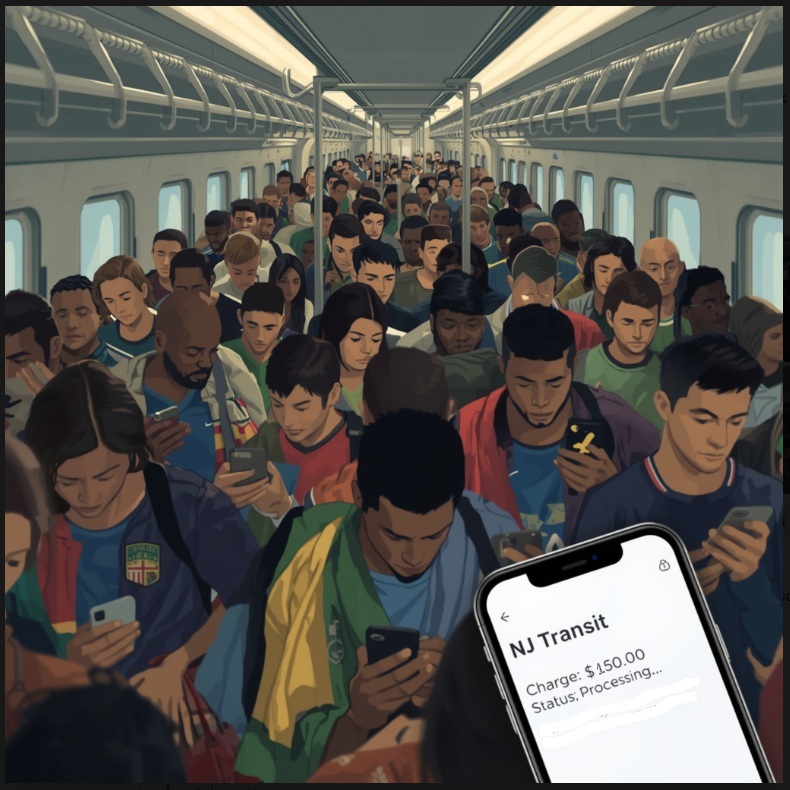
The number that pulled the issue together was $150 — the originally announced round-trip NJ Transit fare to get fans from New York Penn Station to the Meadowlands during the tournament. That fare was later reduced to $105 and subsequently $98 through sponsorship subsidies, but the underlying question remains.
What does it actually cost to move people at this scale? ( ‘Is the math mathing?’ on NJ Transit’s $150 World Cup ticket?)
The fare debate opened the door to a larger issue: public transportation is normally subsidized because it serves everyday movement. But when an extraordinary private event depends on public infrastructure, who pays for the extraordinary cost?
Fans? Taxpayers? Sponsors? FIFA? The transit agency? (And why are commuters being told to stay home (Gothamist: Work from home to avoid World Cup commuter chaos Fox 5: Transit officials urge commuters to work from home during FIFA World Cup) or find other ways to get to a possible Knicks final vs using Penn Station )NJ Transit announces plans to close section of Penn Station for World Cup-bound trains Riders will get a discount to stay home on gamedays. ))
That question runs through the entire report. There’s also information on what the true costs of operating NJ Tranist are. Read the report before you slip into the cliché of that’s no way to run a railroad.
🎟️ The World’s Game, Premium Priced
The train fare is only one part of the cost story.
Fans are also facing expensive match tickets, dynamic pricing, hospitality packages, confusing ticket releases, premium parking, hotel uncertainty, and rising travel costs.
The World Cup is marketed as the world’s game.
But for many fans, access increasingly feels like a premium product.
🛤️ Stadium Location Is Destiny
One of the clearest comparisons is Philadelphia.
Lincoln Financial Field sits directly on SEPTA’s Broad Street Line, making the stadium much easier to serve by transit. Philadelphia can offer a simpler stadium-access experience because the infrastructure already connects directly to the venue.
NY-NJ (as MetLife has been renamed for the tournament) is different.
Boston is different too.
Both the Meadowlands and Gillette Stadium show what happens when major global events rely on suburban stadiums that require special transportation plans, limited parking, managed bus service, and crowd-control strategies.
Or, in Boston’s case, Scottish fans reportedly renting school buses to get to Foxborough. 🚌
That story is funny. It is also a warning.
When official transportation feels too expensive or too inconvenient, fans create their own systems.
🏗️ The Stadium That Wasn’t
The report also looks back at the proposed West Side Stadium over the rail yards where Hudson Yards now stands.
That plan died years ago after political fights, public skepticism, and opposition from Madison Square Garden interests. A Manhattan stadium would have created its own problems, but it would have sat inside the city’s transit network.
Instead, the region is now trying to move World Cup crowds through Penn Station, Secaucus, special trains, buses, premium parking, and commuter diversions.
The geography of that choice still matters.
🌎 The Spectacle Arrives
With all of that said, the World Cup is still supposed to be fun.
Somewhere between Ricky Martin’s “Olé, olé, olé…” Ricky Martin shouting “Olé, olé, olé… ale, ale, ale” during the 1998 World Cup and Shakira and Burna Boy teasing another official anthem for 2026, the tournament became more than a sporting event.
FIFA is planning opening ceremonies with celebrity performers, fan festivals, sponsorship activations, public watch parties, global broadcasts, and enough planning meetings to make a soccer ball need a credentials badge.
That spectacle matters too.
In a divided and stressed-out world, there is still something rare about millions of people gathering in the same places, wearing jerseys, singing songs, arguing over flags, and collectively losing their minds over a ball crossing a line.
That kind of shared experience is worth holding onto.
✈️ Will the World Actually Come?
The report also looks at the softer side of the tourism forecast.
Hotels in some host markets are seeing weaker-than-expected demand. ( World Cup hotel bookings tracking below forecasts NYC hoteliers are world-class worried over sluggish World Cup bookings Hotels and World Cup demand ) International travelers may be thinking twice about U.S. trips because of cost, visa concerns, political climate, proposed screening rules, airfare, and uncertainty.
For property managers and local businesses, that matters.
World Cup crowds affect hotels, restaurants, retail, office districts, public space, staffing, security, and transportation planning.
The world may be coming. But how many people come, where they stay, and how they move around the region are still open questions.
🎉 The Event Spreads Across the Region
The stadium is in East Rutherford, but the World Cup footprint will be much larger.
The report looks at:
⚽ practice sites across New Jersey
🎉 fan zones and watch parties
🍻 bars possibly staying open later
🚶 Ninth Avenue pedestrian improvements
🚇 MTA service planning
🏬 American Dream events
🏙️ Hoboken block parties
🏟️ friendly matches before the tournament
The World Cup will not stay inside the stadium. It will reshape streets, transit patterns, business hours, public spaces, bars, malls, parks, practice sites, and commercial districts across the region.
⚠️ The Other Infrastructure
Transportation is only part of the preparation.
The report also covers:
🚁 drone security planning
🏥 hospital readiness
🎟️ counterfeit tickets and merchandise
🚻 bathrooms and visitor maps
🚔 crowd management
🌱 stadium-field preparations
Mega-events require hidden infrastructure too. The parts people notice only when they do not work.
🐦 And Yes, There Are Detours
Because a transportation report should occasionally have a personality, this issue also includes:
🐦 a pouty pigeon trying to avoid a train fare
🚌 Scottish soccer fans renting school buses
🎶 Ricky Martin references
🤠 Indiana Jones in Switzerland
🦈 a Hudson Yards “what if?”
⚽ at least one terrible referee joke
The World Cup itself is ambitious, expensive, crowded, complicated, overplanned, and somehow still fun.
The report ended up that way too.
So for pre–Memorial Day weekend reading — especially as the weather gods are not cooperating with a beach weekend — this issue is a look at what happens when the world’s biggest sporting event meets the NY/NJ transportation system.
And finding some joy in that, even amid the stress, is a worthwhile GOOOOAAAALLL if I ever saw one.